The door stays open
A driver unloads at a busy hypermarket dock in Al Quoz and leaves the rear door open while the paperwork is signed. In July heat, the box warms up within minutes.


Industries · Cold chain
Live temperature from each compartment, an alert the moment a door stays open or a reading leaves its range, and a temperature record for every trip you can hand to a customer or an inspector.
Where loads are lost
Most spoiled deliveries do not come from one big failure. They come from small things nobody saw in time.
A driver unloads at a busy hypermarket dock in Al Quoz and leaves the rear door open while the paperwork is signed. In July heat, the box warms up within minutes.
A reefer unit that cools fine at 7 am can fall behind at 2 pm on the E11. Without a reading in the office, you find out when the customer rejects the load.
On vehicles where the unit runs from the engine, a long stop with the engine off lets the temperature climb. A stop that looks harmless on the map matters here.
A hotel, clinic or supermarket asks how the load was kept. A paper log filled in at the end of the shift does not answer that question well.
How an alert works
01 · Measure
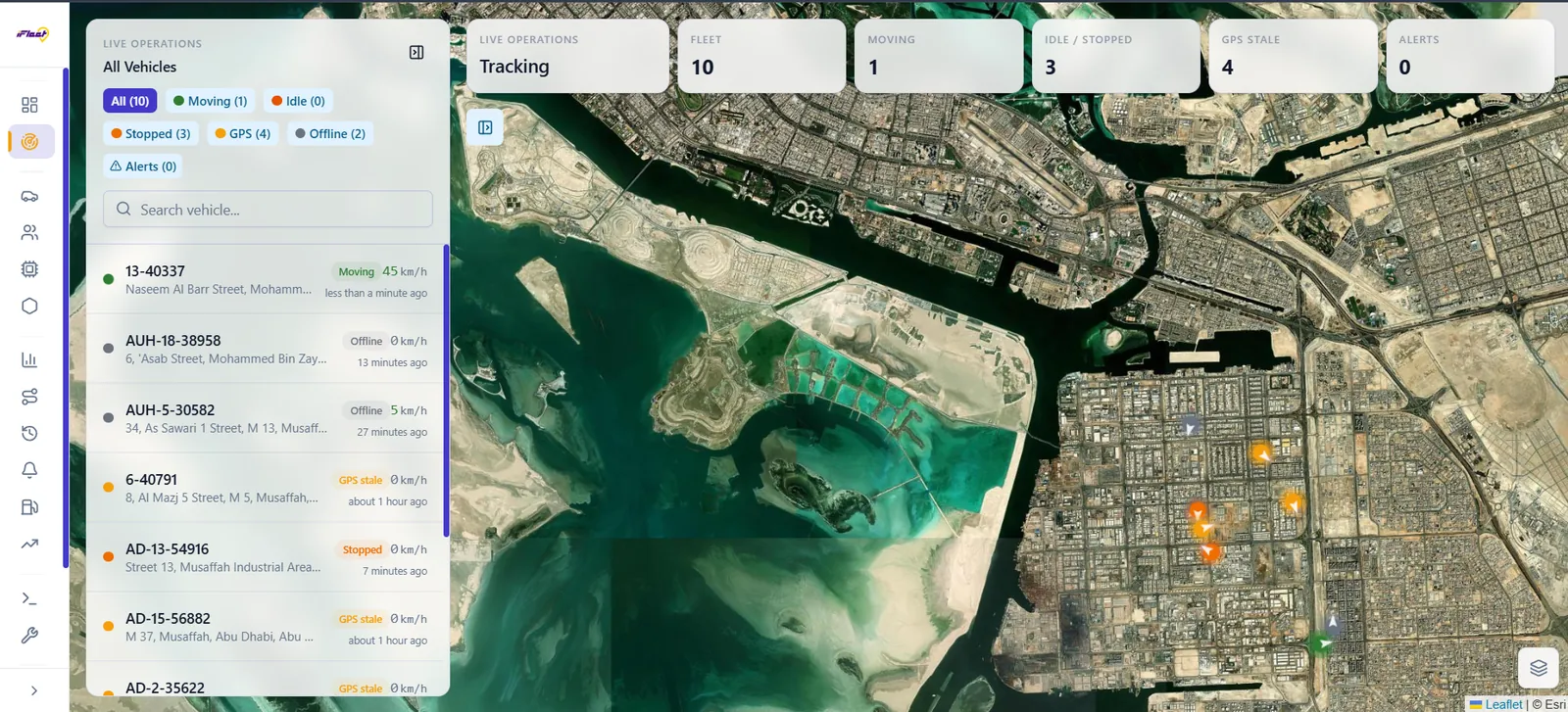
Our technicians mount a temperature sensor inside each compartment, away from the evaporator blast, and connect it to the GPS tracker. Readings go to the platform with the vehicle's position and speed.
02 · Alert
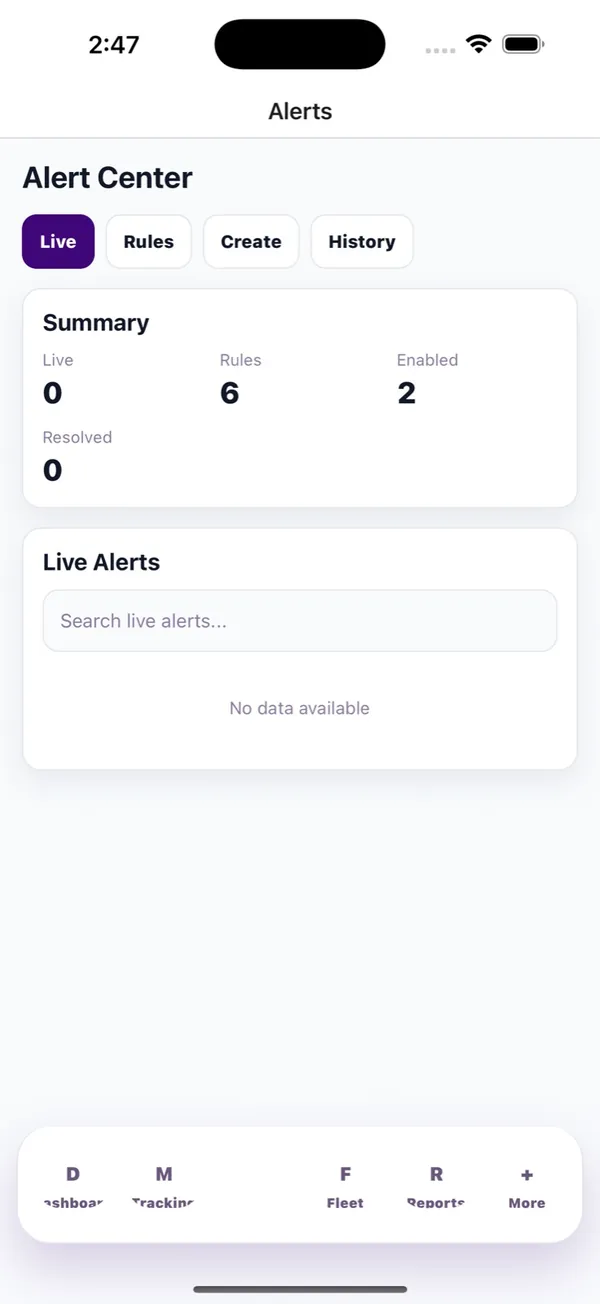
You set a range for each compartment, for example 2 to 5 °C for chilled dairy. When a reading leaves the range, or a door stays open longer than you allow, the alert reaches the platform and the app with the plate, driver and location.
03 · Act
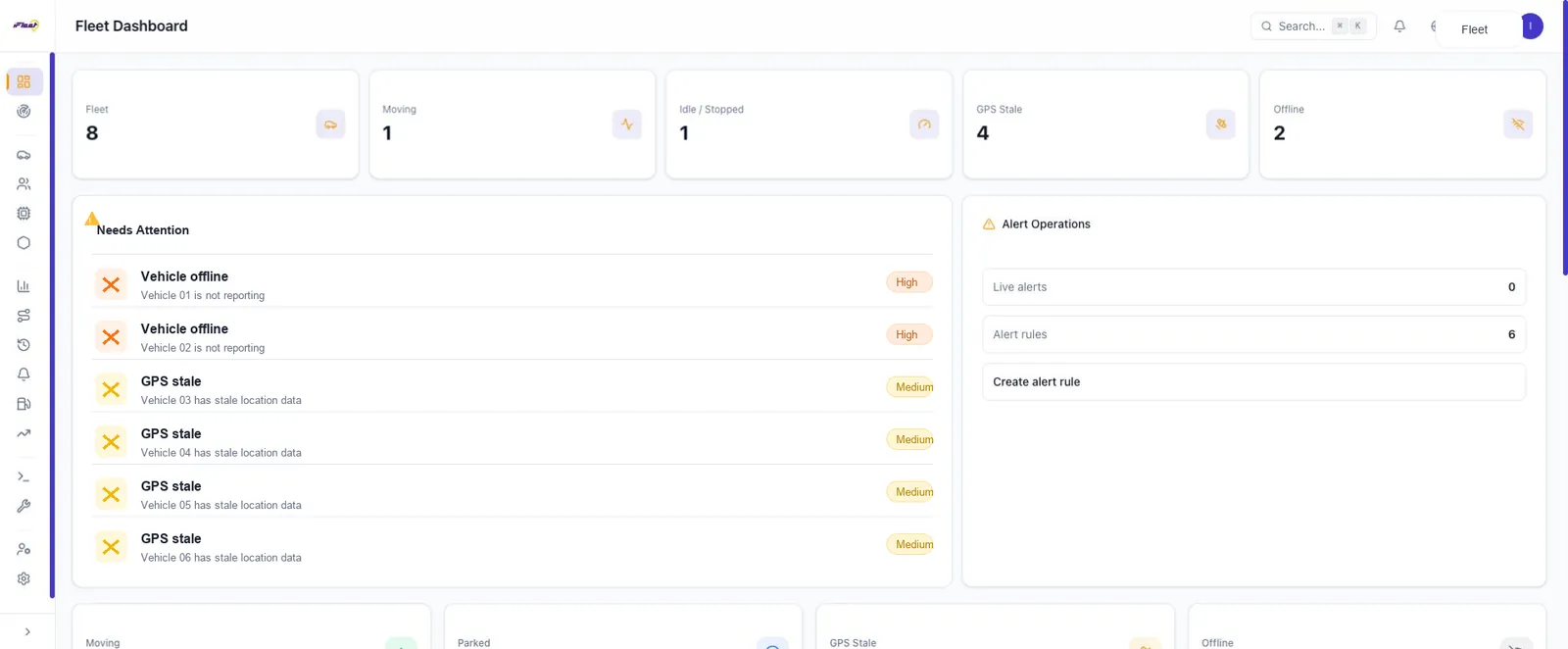
The dispatcher sees the alert, calls the driver, and the door is closed or the unit is checked while the load can still be saved. The alert, the temperature curve and the action stay in the trip history.
04 · Prove
At the end of the day, each trip has its route, stops, door events and a temperature reading for each compartment. Export it as a report for the customer, your quality team or an inspection.
One route, one record
A two-compartment truck delivering chilled and frozen stock to supermarkets and hotels. This is what the record shows.
Both compartments are pre-cooled before loading. The platform shows the curve falling to 3 °C and −20 °C before the first pallet goes in.
Exit alert with the time and both temperatures. Customers in Abu Dhabi get a realistic arrival time from the live position on the E11.
The door-open limit is 8 minutes. The dispatcher gets an alert, calls the driver, and the door is closed. The chilled box peaks at 6.1 °C and recovers in 12 minutes.
The truck idles 35 minutes outside a customer that is not ready. The idle report shows the fuel spent keeping the unit running while waiting.
The frozen compartment holds at −18.4 °C. A slow upward trend on the chilled side is visible early, so the unit is booked for a check that evening.
Route, 12 stops, 3 door events and the temperature curve for each compartment are saved with the trip. The quality team exports it in two clicks.
Records for customers and inspections
Supermarkets, hotels, hospitals and pharmacies increasingly ask transport suppliers to show the temperature during delivery. Food safety authorities in each emirate also expect chilled and frozen food to be kept at the right temperature in transit.
With iFleet, every trip keeps its temperature readings per compartment, door-open events and the route, all tied to the vehicle and the time. You export the report instead of rebuilding a paper log. See the UAE compliance guide for an overview of the rules, and ask us to check what applies to your activity.
Built for refrigerated fleets
Temperature is the reason you call us. Location, timing and driving are what keep the load safe all the way to the dock.
One sensor per compartment, each with its own name and range: chilled, frozen or ambient. Each zone alerts on its own.
A door sensor records each opening. You choose how many minutes is too long, so normal unloading does not flood the team with alerts.
See where each vehicle is and how far it is from the next stop, so you can tell a hotel or supermarket when the truck really arrives.
Arrival and departure times at each cold store, depot and customer, recorded automatically for every trip.
Idling alerts and reports show where engines run for a long time while waiting, which matters for fuel and for units powered by the engine.
Speeding and harsh driving alerts, plus AI dashcam and ADAS options, for drivers on long early-morning routes.
The setup
We plan the setup with you for each vehicle type: a single-box chiller van, a two-compartment truck or a trailer.
Exact specification depends on the device and sensor chosen for your vehicle. We confirm it with you before installation.
Why not just the reefer display?
| Reefer unit display | Standalone data logger | iFleet | |
|---|---|---|---|
| Temperature in the cab | — | In the office and on your phone | |
| Alert while the truck is on the road | — | — | |
| Door-open events with duration | — | Some models | |
| Linked to location and stops | — | — | |
| Trip report for the customer | — | Downloaded after the trip | Exported from the platform |
| Live ETA and route history | — | — | |
| Driver behaviour and cameras | — | — | Optional |
Your reefer unit keeps doing its job. iFleet adds an independent reading in the box, the alerts and the records around it.
Drivers on early routes
Cold chain drivers start before dawn and spend hours on the E11, E311 and city streets. A harsh brake can shift pallets; a crash can lose the whole load.
Add the AI dashcam to warn drivers about phone use and fatigue, and keep a clip of every harsh event. Add ADAS for forward collision and lane departure warnings. The driver always stays in control.
Pricing
Every refrigerated vehicle starts with a tracking plan. Temperature sensors are added per compartment, and door sensors per vehicle.
Live location, temperature alerts and trip records.
AED quote on WhatsApp
Adds road and cabin cameras with fatigue and distraction alerts.
AED quote on WhatsApp
GPS, AI dashcam and ADAS for long routes and heavy trucks.
AED quote on WhatsApp
Add-ons
One per compartment. A two-zone truck usually needs two.
Ask us
Records each door opening and its duration. Depends on body type.
Ask us
See fuel used by the engine and, on some setups, the unit.
Ask us
Know which driver was on each trip when vehicles are shared.
Ask us
We confirm the right sensors for each vehicle before installation.
Before we quote
A short WhatsApp message with this list is enough for an accurate quote.
Yes. Each compartment gets its own sensor, name and range, so the chilled side and the frozen side alert separately.
No. Your reefer unit keeps controlling the temperature. Our sensor gives an independent reading inside the box, sends it to the office and keeps the history. It works alongside units you already have.
The alert appears on the platform and in the mobile app with the vehicle, compartment, reading and location. Your dispatcher calls the driver. When the reading returns to range, that time is recorded too.
You set a delay. For example, a temperature alert only after the reading is out of range for a few minutes, or a door alert only after the door is open longer than you allow.
Yes. Export the trip report with temperature per compartment, door events and the route. Many teams share it with supermarkets, hotels, clinics or their own quality team.
Temperature records help you show how food was kept in transit, but each emirate and activity has its own requirements. See our UAE compliance guide and ask us; we help you check what applies.
Readings are stored in the iFleet platform with the trip history, and you see them on the web and in the app. Ask us about storage location and how long history is kept for your account.
Yes, the same sensors and ranges work for pharmaceutical loads, such as 2 to 8 °C. Tell us your customer's requirements and we check the setup with you.
Tell us how many refrigerated vehicles you run and how many compartments each has. We reply with a setup and an AED price.